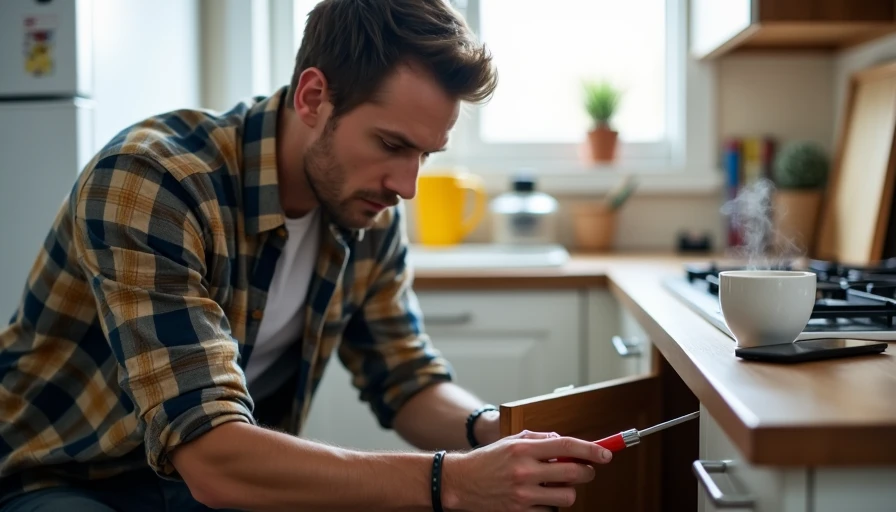
There's a cabinet door in our kitchen that has been hanging crooked for about two years.
Not dramatically crooked. Just enough that it catches on the frame every time you close it, which means everyone in the house has developed the habit of closing it with a little hip-check. Jamie calls it "the family technique." Mateo thinks it's funny. Sofia has started doing it to other cabinets, which is not great.
I've been meaning to fix it for two years. I've also been meaning to look up how to fix it for two years, and somehow never gotten around to either.
So one Saturday morning, coffee in hand, I decided to try something: ask ChatGPT to walk me through diagnosing it.
Not fixing it. Diagnosing it. That distinction turned out to matter a lot.
What I Actually Asked
My first instinct was to ask it how to fix a crooked cabinet door. I'm glad I didn't, because I would have gotten a generic answer that assumed a problem I didn't have.
Instead, I described what I was seeing:
"My kitchen cabinet door doesn't close properly. It catches on the frame at the bottom corner when you push it shut, and it's been getting slightly worse over time. The door is a standard cabinet door with two hinges, mounted on the side. It's not loose or falling off—it just doesn't sit straight anymore.
What are the possible causes, and how would I figure out which one it is without taking the door off?"
That last clause is the important one. I didn't want a list of fixes. I wanted a way to figure out which fix applied to me.
What It Gave Back
It listed four likely causes and, critically, told me how to distinguish between them:
Hinge screws have loosened — most common cause. Test: open the door and wiggle it. If there's play at the hinge, this is likely it.
Hinges have bent or worn — Test: compare the two hinges visually. Look for one that's angled differently.
The door has warped — Test: lay a straight edge against the door face and check for gaps.
The cabinet frame has shifted or settled — Test: check whether the frame itself is still square.
Then it gave me the fix for each one, in order of how invasive they were.
That structure is what made it useful. It didn't tell me what was wrong. It told me how to find out.
What Happened When I Actually Checked
I opened the door and wiggled it.
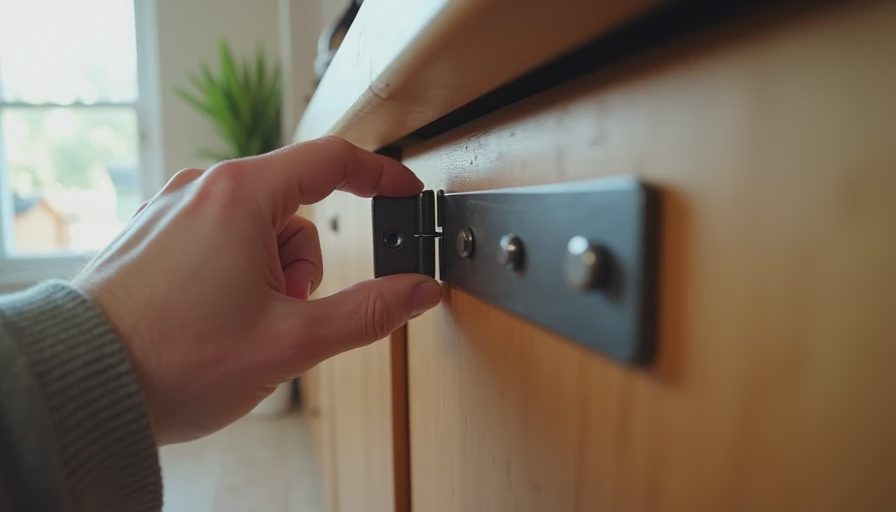
There was play. Noticeable play at the top hinge—the whole door moved maybe a quarter inch when I pushed on it.
So I went back to ChatGPT and said:
"Checked it. The top hinge has visible play—the door moves about a quarter inch when I push on that corner. The bottom hinge feels solid. What does that tell me, and what's the fix?"
It came back with a clear answer: loose screws at the top hinge, and possibly a screw that's stripped out of the wood. It told me to try tightening first, and warned me that if the screw just spins without tightening, the hole is stripped and I'd need a different approach.
Sure enough—one of the two screws at the top hinge spun freely. Stripped.
The Part Where I Nearly Made a Mistake
Here's where I want to slow down, because this is the honest part of the story.
When I told ChatGPT the screw was stripped, it suggested a few options. One of them involved drilling out the hole and gluing in a wooden dowel to give the screw something new to bite into.
That's a real technique. It's also not something I'd ever done before, and the instructions it gave were about four sentences long.
I read them, thought "that sounds doable," and then stopped.
Four sentences is not enough to teach someone a woodworking technique they've never tried. If I'd followed those instructions and gotten it wrong, I would have been looking at a cabinet door with a hole in it, in a kitchen my family uses every day.
So I did what I should have done from the start: I went to YouTube and watched someone do it. Two videos, about eleven minutes total. Then I did it.
It worked. The door closes properly now for the first time in two years.
But the reason it worked isn't that ChatGPT told me how. It's that ChatGPT told me what the problem was, and YouTube showed me how to solve it.
The Test Card
Task: Diagnose a crooked cabinet door and identify the correct repair.
Prompt or workflow: Describe the symptom in detail, ask for possible causes and tests to distinguish between them, then report back with findings and ask for the specific fix.
Starting conditions: A door that catches at the bottom corner, two hinges, no visible damage, problem worsening slowly over about two years.
Time before ChatGPT: Two years of not doing it, plus maybe 30 minutes of vague internet searching that didn't lead anywhere.
Time after ChatGPT: About 20 minutes total—10 minutes diagnosing with ChatGPT, 11 minutes watching videos, 15 minutes actually doing the repair.
Editing required: Not applicable, but verification required was significant. See below.
What went wrong: ChatGPT's repair instructions were too short to be safe for a technique I'd never done. It presented a four-sentence summary as if it were a tutorial. It wasn't.
Privacy notes: No personal information involved. The only thing I'd flag is that I didn't include photos of my kitchen or describe our home layout—no reason to, and no reason to put that anywhere.
Who should not use this method: Anyone dealing with electrical, gas, plumbing, or structural work. Anyone who doesn't have a way to verify the instructions before acting. And anyone who's going to treat ChatGPT's answer as a tutorial rather than a starting point.
The Rules I'd Give Anyone Trying This
I've thought about this a lot since, because I can see how this could go badly for someone who trusted it more than I did.
Diagnose With It, Don't Fix With It
This is the whole lesson. ChatGPT is genuinely good at helping you narrow down what's wrong. It's not good at teaching you a physical skill through text.
Use it to figure out what the problem is. Use a video, a person, or an actual manual to learn how to fix it.
Always Ask for the Test, Not Just the Answer
"Possible causes" is a weak prompt. "Possible causes, and how to tell which one it is" is a strong one.
The second version makes ChatGPT show its reasoning instead of just handing you a conclusion. It also means you're doing the actual diagnosis—which is the part where you learn something.
Escalate Anything Involving Utilities
Electrical, gas, plumbing, structural. I don't care how confident the answer sounds. If getting it wrong can hurt someone or flood your house, you call a professional. That's not a limitation of ChatGPT. That's just being a responsible adult.
Watch Someone Do It
If the repair involves a technique you've never used, text instructions aren't enough. Watch a video. Watch two. You'll learn more in ten minutes of watching than in an hour of reading.
Stop If You're Not Sure
If at any point during the repair you're not confident about what you're doing, stop and reassess. A crooked cabinet door is annoying. A cabinet door with a hole drilled through it is a project.
Know Your Own Limits
I'm comfortable with a screwdriver and a drill. I'm not comfortable with anything involving a saw or a load-bearing wall. Knowing where your line is matters more than any prompt.

What This Was Actually Worth
Two years of a crooked door, fixed in about 45 minutes once I actually sat down to deal with it.
Was ChatGPT the reason? Partly. It narrowed the problem from "this door is broken somehow" to "the top hinge has a stripped screw." That's real value—it's the difference between knowing what to look up and wandering around a hardware store hoping something jumps out at you.
But it wasn't the whole thing. The actual repair knowledge came from watching a person do it. And the judgment about what I could safely attempt came from me.
That feels like the right division of labor. ChatGPT helped me figure out the problem. A video taught me the technique. I decided whether to attempt it.
If you're staring at something in your house that's been broken for longer than you'd like to admit, this is worth trying. Just go in knowing what it's good for and what it isn't.
No magic. Just a cabinet door that finally closes right. I tried it in my kitchen so you don't have to.